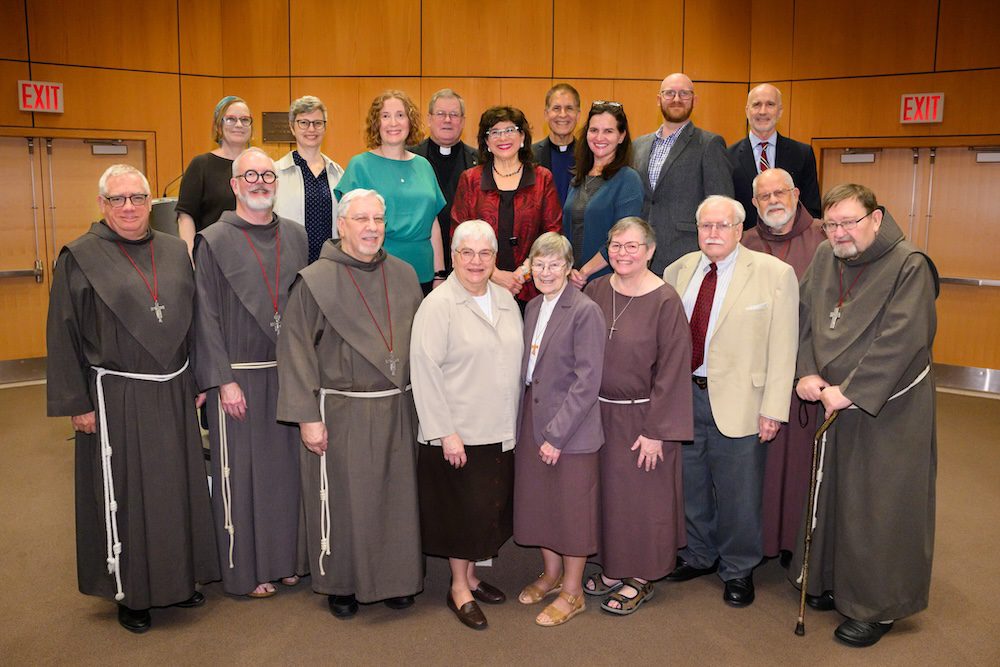
Photo credit: Fordham University/Nina Wurtzel.
As we near the end of 2025 – this “Ecumenical Year” in which so many major anniversaries are being celebrated and the future of interchurch and interreligious peacebuilding is coming into focus as increasingly urgent – Graymoor Ecumenical & Interreligious Institute (GEII) has been hard at work on new initiatives and partnerships that are already bearing fruit.
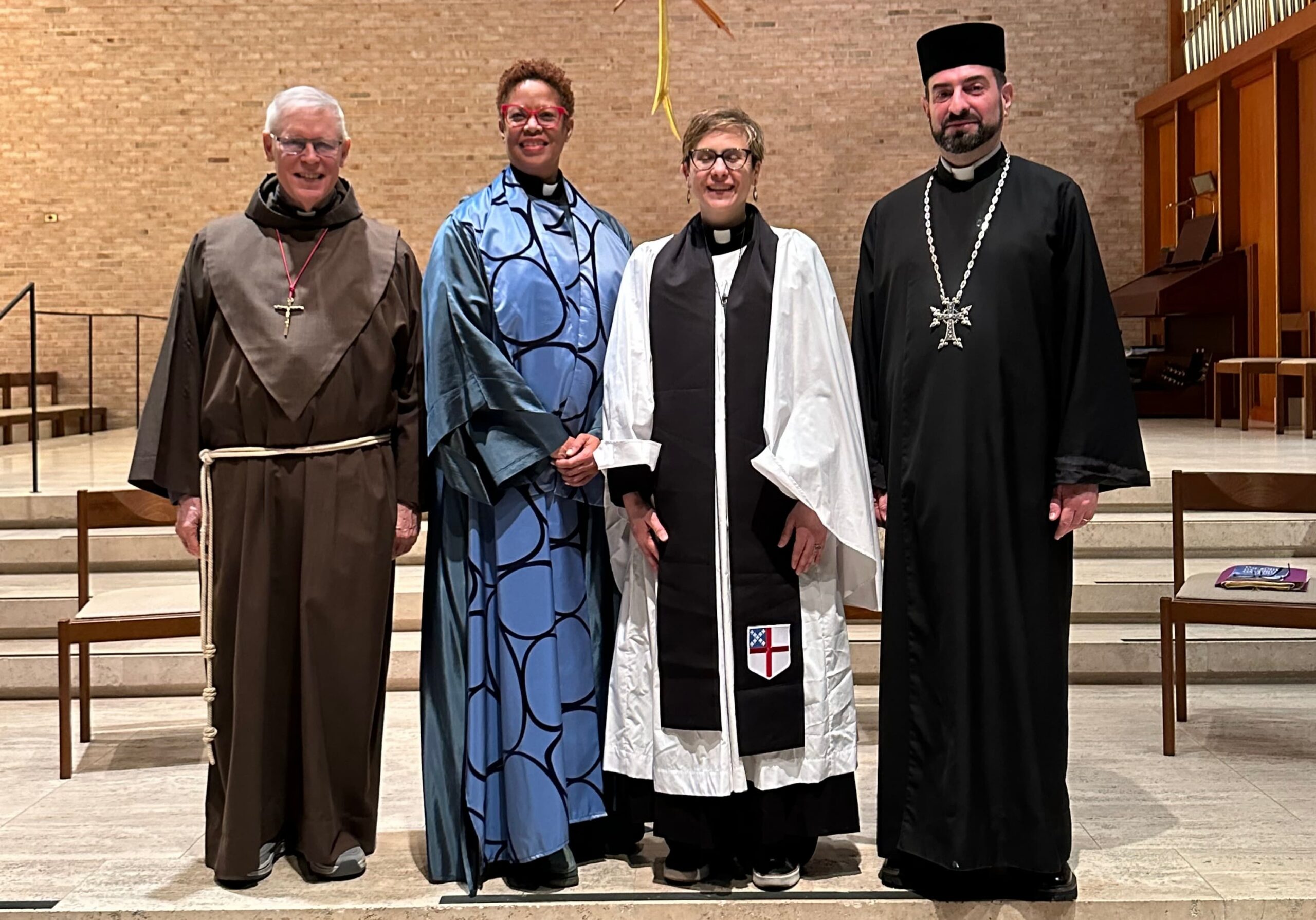
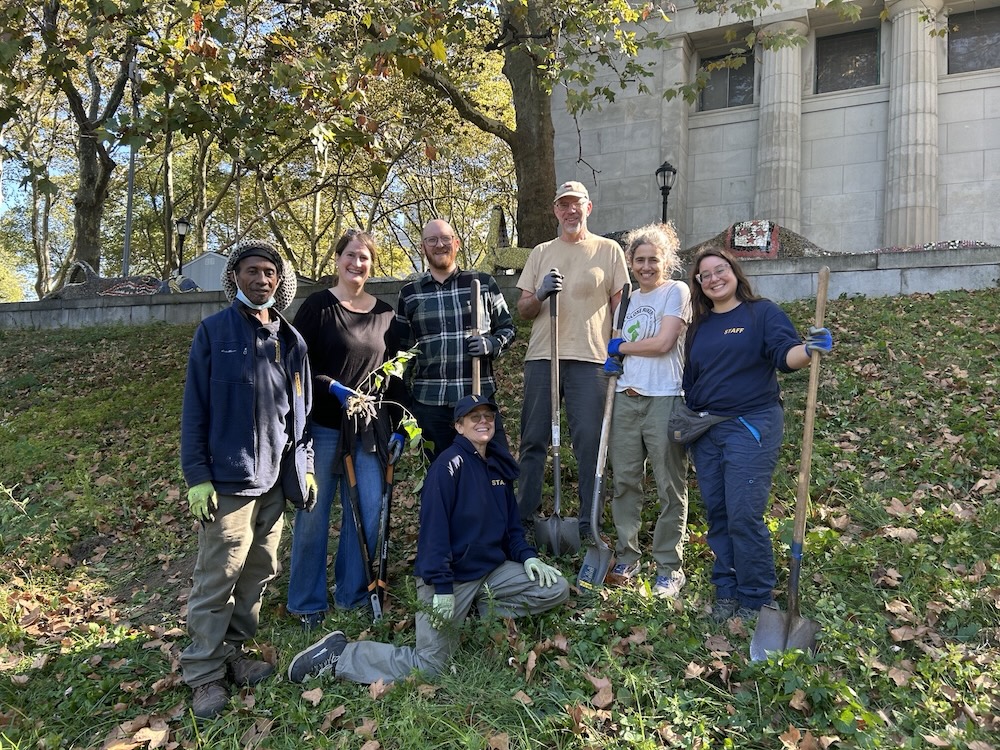
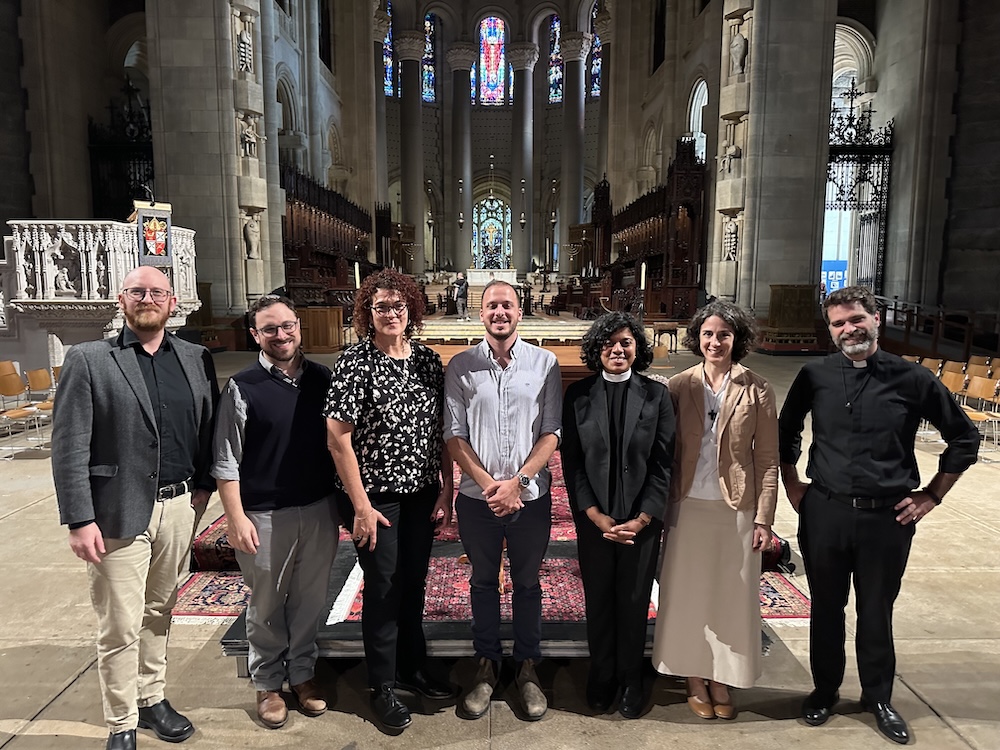
On October 1-3, we hosted a Season of Creation Interfaith Gathering at the Interchurch Center in Manhattan, where GEII has been based since the 1980s. Collaborating with the Interfaith Center of New York and the Riverside Park Conservancy (neighboring tenant organizations in the Interchurch Center) as well as the Center for Earth Ethics at Union Theological Seminary, we hosted faith leaders from the Jewish, Muslim, Christian, Hindu, Mexica/Purepecha-Otomi, and Ramapough Munsee Lenape communities, for a service of music, prayer, and reflection on humanity’s integrity with and responsibility for all creation. The service concluded with a procession from the Interchurch Center Chapel out into Riverside Park, where the faith leaders poured the water they had blessed during the service into the roots of a great American Elm tree. Two days later, Interchurch Center tenant staff (including from GEII) came together for a service project in Riverside Park, removing invasive species under the guidance of the Riverside Park Conservancy, concluding the Interchurch Center’s inaugural observance of the Season of Creation with a pivot from spiritual reflection to collaborative action in service of our shared environment.
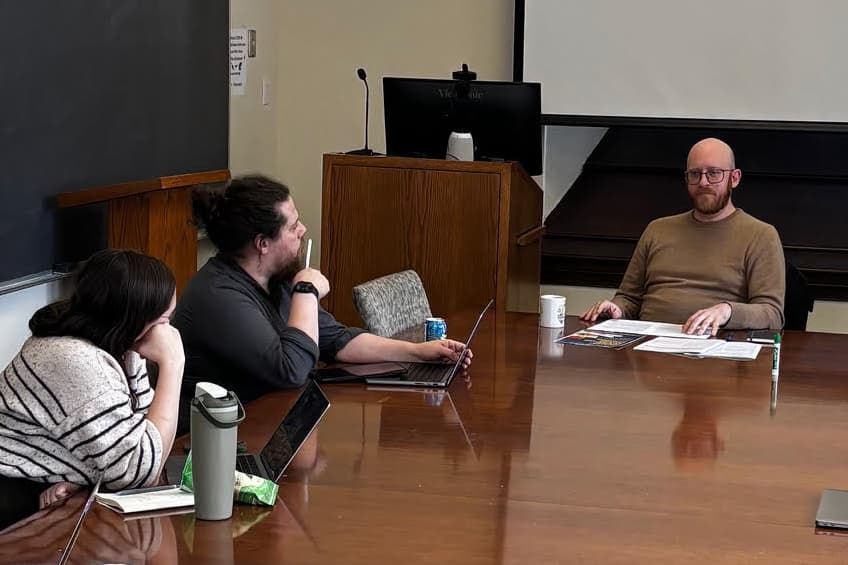
On October 11, GEII’s executive director, Dr. Aaron Hollander joined the Community at the Crossing, a residential ecumenical community based at the Episcopal Cathedral of St. John the Divine and overseen by the Chemin Neuf Community, for the third year in a row as the instructor for the Community’s educational module on “Christian Division and Unity.” Dr. Hollander led a morning session charting the history of the early and medieval church, showing that the major schismatic moments when Christian diversity devolved into Christian division were products of their time, being neither inevitable nor irreversible. In the afternoon, his second session took up the modern ecumenical movement, examining the four key “streams” of missionary ecumenism, Faith & Order, Life & Work, and spiritual ecumenism. Dr. Hollander is available to offer versions of these teaching modules as adult formation sessions or workshops in university or seminary settings.
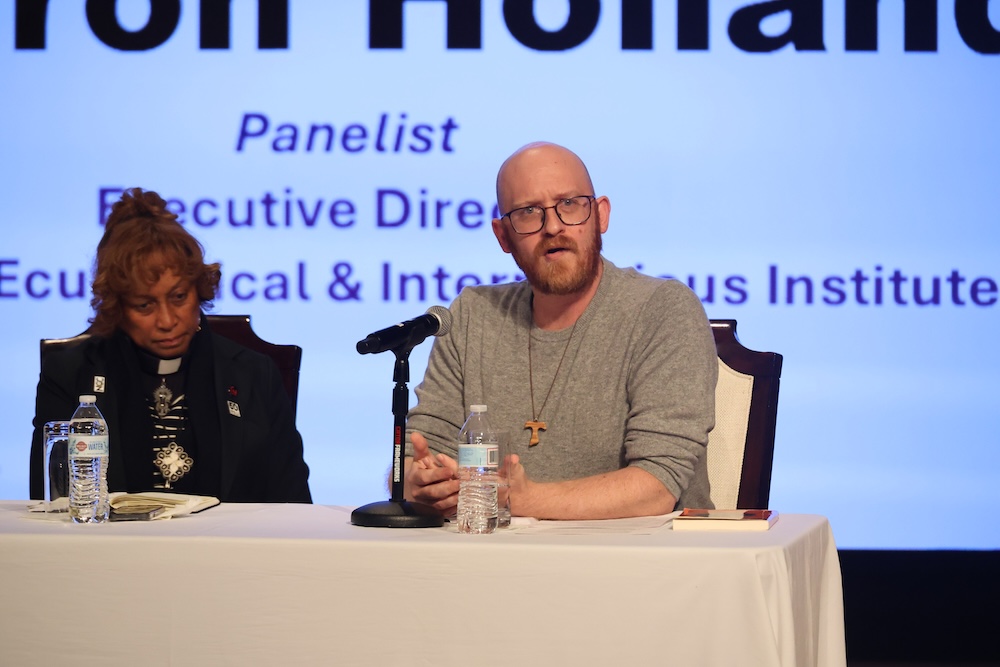
On October 13-14, Dr. Hollander traveled to Boston to participate in a panel of ecumenical leaders hosted by the National Council of Churches, as part of the NCC’s 75th Anniversary Gathering. The panel was entitled “Challenges and Opportunities of Ecumenism in a Polarized Society,” and Dr. Hollander spoke alongside the Rev. Dr. Jean Hawxhurst (Ecumenical Staff Officer, United Methodist Conference of Bishops), the Rev. Dr. Monica Schaap Pierce (Executive Director, Christian Churches Together), and the Rev. Dr. Angelique Walker-Smith (President from North America, World Council of Churches). Dr. Hollander spoke about some crucial insights for our contemporary moral/political environment in the United States available in the pioneering sectarianism research undertaken in Northern Ireland during and after the Troubles. The video recording of the panel is available on YouTube.
On October 19, we returned to St. John the Divine for the first of our 2025-2026 “Dialogues on Divinity Series,” which GEII is co-organizing alongside the Community at the Crossing. In this first installation, also co-sponsored by the Milstein Center for Interreligious Dialogue at Jewish Theological Seminary, we welcomed Hana Bendcowsky and John Munayer (an Israeli Jew and a Palestinian Christian), program staff at the Rossing Center for Education and Dialogue in Jerusalem. The dialogue, entitled “Cycles of Conflict and the Healing of Hatred,” introduced a spellbound audience in the Cathedral to the Rossing Center’s trauma-informed methodology, based in the tools of spiritual counseling, for beginning to uproot the forms of hate that we too easily internalize and become trapped by in situations of intense conflict and betrayal.
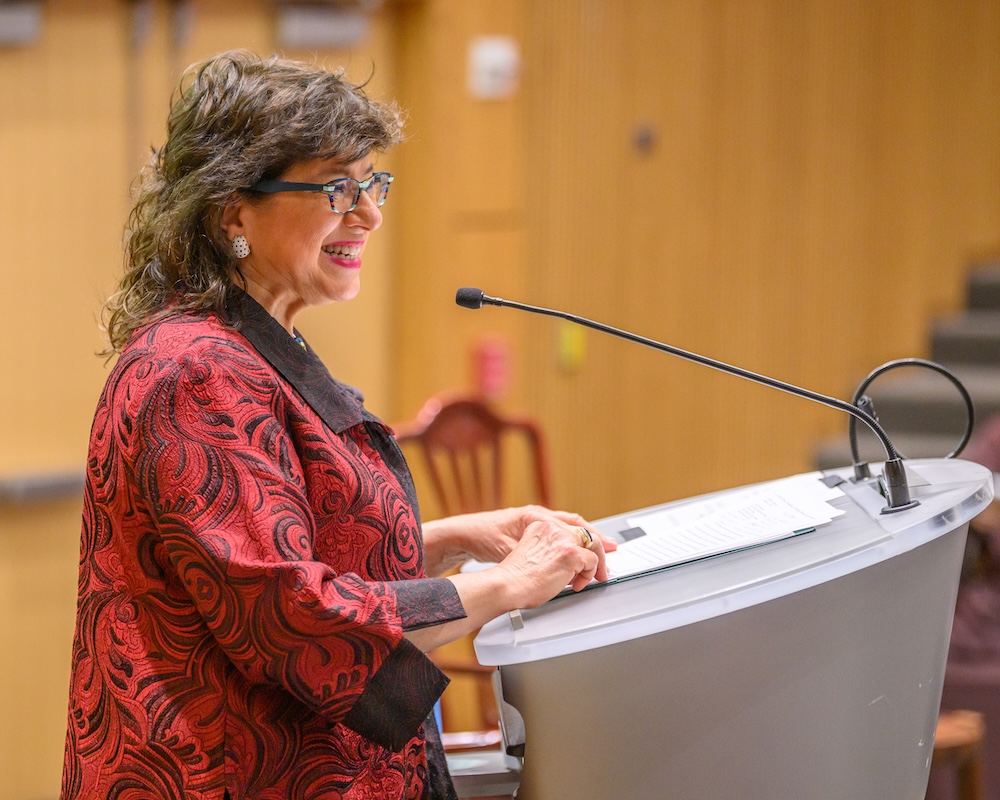
Finally, on October 20, GEII was honored and delighted to co-host the inaugural Paul Wattson Lecture at Fordham University. After fifty years of Paul Wattson Lectures being hosted at universities across North America and overseas, honoring the legacy of the founder of the Franciscan Friars of the Atonement through distinguished public scholarship, 2025 marked the first time the lecture series came to New York City. Following afternoon events hosted by Fordham’s Campus Ministry Program and Theology Department, the evening’s lecturer was Professor Susannah Heschel, Eli M. Black Distinguished Professor of Jewish Studies at Dartmouth College, who spoke on “The Faith of Others: The Inspiration of Interreligious Dialogue in Light of Nostra Aetate”; Heather Miller Rubens, Executive Director of the Institute for Islamic, Christian, and Jewish Studies (Baltimore), offered a response. Our organizing partners at the university were delighted by what the Paul Wattson Lecture represented: not only as an event commemorating the 60th anniversary of Vatican II’s Declaration on the Relation of the Church to Non-Christian Religions, but also as the beginning of a longer-term collaboration. The video of the 2025 Paul Wattson Lecture at Fordham University is available on YouTube.