
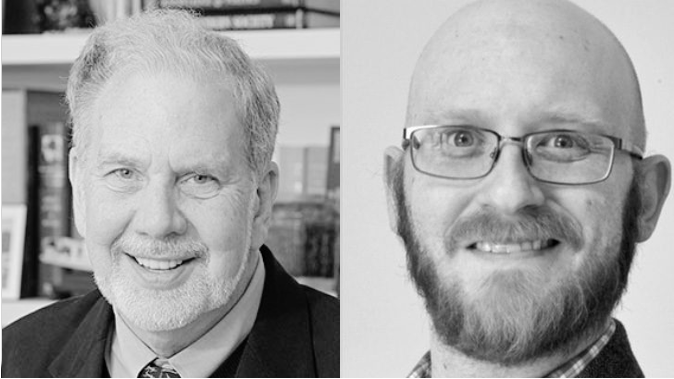
Dr. John Sexton is President Emeritus of NYU, Dean Emeritus of NYU Law School, and the Benjamin Butler Professor of Law. He joined the Law School faculty in 1981 and was named the Law School’s Dean in 1988 and NYU’s President in 2001, serving in each position for 14 years. Sexton served as Chair of the American Council on Education, New York’s Commission on Independent Colleges, the New York Academy of Sciences, and the Association of American Law Schools. He also served as Chair of the Board of the Federal Reserve Bank of New York for five years. Sexton has received numerous awards, including honorary doctorates from 26 universities. In 2016, Commonweal Magazine honored Sexton as the Catholic in the Public Square. The previous year, the Arab-American League awarded him its Khalil Gibran Spirit of Humanity Award, and the Open University of Israel gave him its Alon Prize for “inspired leadership in the field of education.” Sexton received a BA and a PhD in Religion from Fordham University, and a JD magna cum laude from Harvard Law School. He is the author of several books, including a NY Times bestseller, Baseball as a Road to God (Penguin, 2013).His latest book, Standing for Reason (Yale, 2019), addresses broad trends in global civil society and higher education.
Dr. Aaron T. Hollander is Executive Director of Graymoor Ecumenical & Interreligious Institute, Editor of Ecumenical Trends, and Adjunct Faculty in Theology at Fordham University. He is a scholar of theology and culture with his PhD from the University of Chicago. He serves on the steering committee of the Ecclesiological Investigations International Research Network, the board of the North American Academy of Ecumenists, and the summer faculty of the Centro Pro Unione in Rome. His research focuses on the lived dynamics of ecumenical and interreligious conflict, the aesthetic texture and political power of holiness, and the circulation of theological understanding beyond explicitly religious settings. His first book, Saint George Liberator: Hagiography as Resistance in the Modern Mediterranean (Fordham UP, 2026), is a historical-ethnographic study of Orthodox Christian hagiography amidst cultural and political domination. His second book, an edited volume entitled Saints in Divided Societies, is forthcoming in 2027.
Aaron Hollander, for Ecumenical Trends: Dr. Sexton, it’s an honor to have the opportunity to speak with you about some urgent contemporary questions at the intersection of ecumenical history and contemporary politics. So that our readers can fully appreciate where you’re coming from and why this conversation is so timely, I’d like to touch on a couple of milestones in your own remarkable biography. You are, if I understand correctly, Brooklyn born and raised. You’ve been a professor of religion, law, and public service for some six decades now. You served as a law clerk for the Chief Justice of the United States Supreme Court. You were the fifteenth president of New York University, transforming the campus here in New York and overseeing the creation of new international campuses in Abu Dhabi and Shanghai. You hold honorary doctorates from a whopping twenty-six universities, and since retiring, you’ve continued teaching for the love of it, including your justly famous course on “Baseball as a Road to God.” Would you consider any of these milestones, or something I’ve omitted, to be an especially defining pivot point in the trajectory by which you came to be who you are today?
John Sexton: Thank you for inviting me to speak with Ecumenical Trends; it’s a pleasure to join you.
The throughline of my intellectual development, I think, starts at a Jesuit high school in Brooklyn: Brooklyn Prep. The school hasn’t existed since 1972, but it was so powerful as a learning and spiritual community that each year since 1972 many of the living graduates have convened for mass and dinner with our teachers at Xavier High School. The Prep was and is the quintessential learning community, animated by great teachers dedicated to the vocation of teaching – including figures like Daniel Berrigan, who taught me religion about a decade before he became the activist we know as a leader of the Peace Movement.
For me, the dominant figure in my time at Brooklyn Prep was a man named Charlie. He was not a Jesuit. He was once described as having the body of Orson Welles, the voice of James Earl Jones, and the soul of St. Francis of Assisi. In a way, that description captures him; but, in truth, Charlie was indescribable – ineffable in a way. He had to be experienced to be known. He thought strangely about things and taught us the joy of seeing the world in different ways.
“Play another octave of the piano.” If there are notes you haven’t touched, if there’s a food you haven’t tasted, if there’s music you haven’t heard, if there’s a place you can reach where you haven’t been, if there’s a kind of person you’ve never met – as long as it’s moral and legal – reach out and embrace the new experience.
There was a group of us whom the Jesuits had selected somehow, who studied with Charlie for an hour a day, five days a week, for all four years of high school. In a course they simply called “Charlie,” he started with the cave paintings in Altamira and percussion music, and he led us up through the centuries weaving together history, literature, art, and music as the story of humanity – this, before anybody ever used the word “interdisciplinary.” In truth, I am just a Charlie knockoff. I’ve never really had an idea about education that he didn’t have first; his ideas have descended to second or third generation versions, but the essence is the same. There’s a phrase that Charlie used, which became the motto of the Global Network University at NYU: “Play another octave of the piano.” If there are notes you haven’t touched, if there’s a food you haven’t tasted, if there’s music you haven’t heard, if there’s a place you can reach where you haven’t been, if there’s a kind of person you’ve never met – as long as it’s moral and legal – reach out and embrace the new experience. Play those new notes.
In short, Charlie instilled in us a kind of affirmative embrace of difference – no small thing, since this was the time of Senator Joe McCarthy and the era of extra ecclesiam nulla salus in the Catholic Church. I remember Daniel Berrigan writing those four Latin words, meaning “outside the church there is no salvation,” on a Brooklyn Prep blackboard.
I’m a Catholic to this day, I identify as a Catholic in public, but I struggled with triumphalist and exclusionary principles like this in the days before Vatican II. Charlie helped me see the possibility of what we later would call an ecumenical world – a world that came more fully into focus with the Vatican Council, which by happy accident overlapped with the years that I was at Fordham for college and then a doctorate in religion.
So much of my life and way of viewing the world has been overshadowed by the shifts heralded by the Council. My college grades at Fordham were very poor, because I was spending most of my time coaching debate at my sister’s high school in Brooklyn and I never went to class. In senior year, when I actually was on my way to class (because I could not afford another grade of D, the top grade if you missed too many classes), Timothy Healy, then a very young Jesuit priest (later, the transformative Georgetown President) stopped me on the quadrangle to say he was disappointed in me. But, he said, “The Vatican Council is happening. It’s going to be important for Catholics to understand other religions. So, we’re starting a PhD program in religion, and we’ll give you a second chance – a fellowship to study religion.” At the time, I felt very honored, but in retrospect, I know he had funding for a program, but no students!
So I arrived the following Fall as a PhD student in religion, one of only two students in the program that first year. I was a strange PhD student, though, because although I was interested in religion, it was not my intention to devote my life to its study. If you asked me then what my life was going to be, I was going to teach high school and coach debate. The fellowship allowed me to study something of interest to me, even as it put food on the table (I was not being paid for coaching debate).
When I finished my PhD, I became a professor – somewhat of a unicorn, as a Catholic with a PhD in religion from a Catholic university, and, since the ecumenical movement was in full swing, I was attractive on the job market. I could have landed at Harvard or Yale – in fact, I’m probably the only person ever to prefer Brooklyn’s St. Francis College over Harvard and Yale! Brooklyn, and the world of debate, was where I wanted to be. Still, my time studying religion in those years imbued in me a heuristic that I now would label truly “ecumenical.” Every step along the way, I simply was playing out Charlie’s maxims and applying them to domains that were unfamiliar with the notion of ecumenical thinking.
When I speak about moving that ecumenical perspective into the secular sphere, it looks revolutionary to some for some reason, especially today, because our politics is more virulently dogmatic than our religion was in 1955. It feels impossible, or even seditious, to talk red to blue or blue to red. But those of us illuminated by these past decades of ecumenical energy know that there’s a way to do it well.
When I speak about moving that ecumenical perspective into the secular sphere, it looks revolutionary to some for some reason, especially today, because our politics is more virulently dogmatic than our religion was in 1955.
AH: We’re arriving to the heart of what I wanted to speak with you about today, and this is such helpful context from your trajectory of thought. Thank you.
So – you’ve shared with us a little of how you came to combine this background in American religion with decades of expertise and involvement in civil law, which many of us might be inclined to assume are discontinuous or at least cautiously connected territories. But you’ve begun to highlight a connection – a kind of inverse relationship but also a promising possibility of cross-pollination – between the success in many respects of the ecumenical movement among the churches, on the one hand, and the decline or fragmentation of a coherent political environment in the United States, on the other.
At the 2025 Forum on Faith, where I first heard you speak, you spoke passionately and persuasively about the role that ecumenical methods and perspectives might play in healing our corroded political environment today. You traced two seventy-year arcs from 1956 to today, speaking about the movement from triumphalist dogmatism to productive ecumenism in the religious sphere, and contrasting this movement with political developments in the opposite direction, taking us from a culture of pragmatic cooperation to what you call a “secular dogmatism” that spawned “the secular equivalent of religious wars.”
A little later on, we’ll come back to the ecumenical trajectory and the ecumenical resources especially. But before we get there, how would you briefly begin to explain the crisis of communication across lines of political difference in the US today? It’s an enormous question, of course, but can you help make what’s happening seem more manageable?
JS: We’re at a moment where a whole host of currents, call them trends if you like, have combined to form a giant surge that is quite overwhelming. I sketch these developments in my book, Standing for Reason,1 and although I wrote it during President Trump’s first term, I didn’t mention him at all – and if I were writing it today, I still wouldn’t mention him, because, in my view, this is not ultimately about him. He is a dramatic symptom, and there obviously is a synergy between his rhetorical style and what I will describe, but this trend – which you rightly describe as a seventy-year trend – already was very noticeable at least thirty and maybe even forty years ago.
I began speaking about this publicly in 1997, when I was the head of the Association of American Law Schools. I had uncovered a memo written for political purposes that urged candidates to vilify judges and lawyers, advising them that doing so would yield political gold; indeed, the advice that was given was that there was nothing too negative that a candidate might say about judges and lawyers. That was, for me, the first real evidence that an intentional effort to undermine faith in institutions had been unleashed.
It is interesting to return today to an article written by Robert Bellah in 1965. Called “Civil Religion in America,”2 it begins by describing what he calls an “Old Testament” period in the history of America, by which he means the founding period when we saw ourselves as the people chosen to manifest to the world what a democracy could be. Then, he notes the “New Testament” period, beginning with the Civil War and captured in Abraham Lincoln’s notion of civic sacrifice (the “martyrs of Gettysburg”). Finally, he addresses the time in which he was writing as a period of “fulfillment.” Freeze that moment – a moment in which the lyric words of John Kennedy’s inaugural speech resonated and in which even the assassination of President Kennedy could be experienced as a singularity, rather than as a beginning of a horrific trend.
Reading the article now, its assumption of a commonweal and its assumption that institutions were basically worthy are a bit startling. Today, we know that the women’s movement, the civil rights movement, and the peace movement lay just ahead in 1965 and that they would reveal the deep sins of a cultural and political environment that seemed at the time acceptable; there was a lot wrong with American society. But, reading this article with students today, I have found that the feature of it they find most startling is that there ever was a notion of shared trust in the system.
Even the revelation of our sins – and we know this from the sacrament of confession – could have led in any number of directions, one of which well might have been characterized by a new commitment to creating a more enlightened, just national common. We might have healed our hearts, made amends, and become better. Sadly, this rectifying sense of learning from sin has not been the path chosen after that moment of reckoning in the 1960s. Rather, the reckoning itself began to undermine faith in once-trusted institutions. By the time we entered the 1990s, it had become political gold to write negatively even about the instrument of law, the element of American society that Alexis de Tocqueville saw as binding us together as a society. And today leaders tell us that we can’t trust our courts or our elections. Is it any surprise that we should end up with polling where a majority of our citizens do not trust their neighbors?
This collapse of community into self-segregated affinity groups (a balkanization of society) is exacerbated by the overwhelming flow of information to which we are subjected – and because trust has eroded, we don’t trust anybody to curate or vet that information for legitimacy. So, we inhabit colonies in intellectual and political caves.
AH: A metaphor that has come up repeatedly over the past few years is that of the Tower of Babel. I’m thinking not least of your colleague Jonathan Haidt’s wonderful 2022 article in The Atlantic, which takes Babel as a focusing lens for the deleterious cognitive effects of social media bubbles. Or, more recently, Pope Leo’s encyclical Magnifica Humanitas, which contrasts the biblical vision of Babel, as a project of self-affirmation and aggrandizement resulting in mutual incomprehensibility, with that of the rebuilt walls of Jerusalem, as an image of shared responsibility and other-oriented communion.3 In either case, the warning is about a situation in which we not only have self-interested institutions with a monopoly on the understanding of their constituents but also a corroded information climate with no independent or stable point from which to adjudicate between rival realities.
JS: Part of the crisis here is one of leadership, because the voices that are most prominent in shaping public perception and shared understanding are increasingly factional voices. We have what I’ve called “secular popes” – whether Rachel Maddow or Tucker Carlson, or whoever it is from whom particular citizens take their precepts of their “secular theology” – who instruct on how we to think about issues. Many of us no longer reason to positions; rather, they accept positions as revelations.
AH: All of this brings back into focus my overarching question for you today, which is about how we can move from a better diagnosis of the trajectories we’ve witnessed over these last seventy years to a proactive intervention in this situation, drawing on the insights and methods of ecumenical rapprochement and reconciliation over this same time period. In terms of the emphasis in your speaking and writing on ecumenism as a resource for our political moment in our civil society, what are some of the secular lessons that can be drawn from the ecumenical movement over the last several generations?
The first thing we need to say is that it’s not a fool’s errand to try to repair what has been twisted out of shape in our society. I’m finding it more and more necessary, as I teach my law students, to preach the duty to hope. I draw from the history of the ecumenical movement . . . to articulate the simple hope that one has to have in order to venture into the fray.
JS: The first thing we need to say is that it’s not a fool’s errand to try to repair what has been twisted out of shape in our society. I’m finding it more and more necessary, as I teach my law students, to preach the duty to hope. I draw from the history of the ecumenical movement (and the truth and reconciliation movement) to articulate the simple hope that one has to have in order to venture into the fray.
Those of us who have lived the religious ecumenical movement should pause to reflect on how far we’ve come in the past seventy years. Seventy years ago, Daniel Berrigan could say in all earnestness that my friend Jerry Epstein was not going to heaven because he was Jewish; today, we celebrate the multifaceted, multi-perspectival process of understanding the mystery of meaning and spiritual depth in which we find ourselves. Or, alternatively, travel mentally to the early ecumenical movement, a time of pervasive Catholic-Protestant animus that it seemed could never be overcome; then, return to see how capable we are of being otherwise. So, the first step is instilling hope that seemingly irreconcilable divisions can in fact be bridged.
In the secular sphere, if there indeed was a time when our institutions (imperfect though they were) were worthy of our trust, then we can have hope that they will be worthy once again – and we can go about the work of making them even “more perfect” than they were. If it once was, it can be; and it can be better. And, as we strive to do this hard work of creating a worthy order of “secular ecumenism,” we can take solace from the success of (and use as a roadmap the techniques of) the religious ecumenical movement.
AH: That’s very powerful, because young people especially, as you know from teaching college students, are struggling to see a way out of this Babel-land of irreconcilable and untranslatable truths and values. They need to be able to imagine what a way forward from here might look like.
JS: A second key lesson from ecumenical history is the importance of slowly building outward in concentric circles of trust rather than going straight to the most difficult or fraught points of division and trying to muscle through to a mutual understanding of them. It’s an ancient Confucian idea, but this patient, concentric building out toward the most difficult questions from points of core commonality has shown its real promise in the ecumenical movement and in truth and reconciliation processes.
Genuine ecumenical conversation requires vulnerability and genuine engagement – because the act of dialogue builds on a willingness, first of all, to see yourself as your partners in conversation see you, not as you think they ought to see you, not as you see yourself, but truly as they see you.
Genuine ecumenical conversation requires vulnerability and genuine engagement – because the act of dialogue builds on a willingness, first of all, to see yourself as your partners in conversation see you, not as you think they ought to see you, not as you see yourself, but truly as they see you. From there you can begin to understand where they are as they see things differently from you. This is an interpersonal exegetical exercise – which we know from scripture, from constitutional interpretation, and indeed from love between partners and the true vulnerability of an I-Thou relationship.
A third lesson, maybe the simplest of all, is the importance of listening. Even in the binary world of competitive debate, listening is an important attribute of a champion: it is impossible to answer an argument if you do not hear it well in all its nuance. And, even in debate, as you verbalize your own argument, you must be aware of the many possible ways in which it might be heard (not just the way you intend it to be heard). This lesson is at the heart of the “dialogic dialogue” of ecumenical discourse, whether religious or secular.
Think of the process of genuine dialogue for a moment. If we wish to be heard (rather than simply to speak), we must understand our interlocutor deeply, where they are in the dialogue and, concomitantly, how they are likely to understand what we want to say to them (which means we must strive to understand how they see us). On the other hand, when our interlocutor offers a statement, we must strive to see their intended meaning rather than resting with our initial understanding – which requires comprehending the place from which they speak. This process requires that we abandon defensiveness and embrace an assumption of good will.
… the true starting point for dialogue is not even our points of commonality with the other, but rather is within ourselves, with a healing of the relationship of the self to the self and with a conversion toward new ways of seeing those whom we have feared and hated.
AH: I’d like to come back to your notion of concentric circles of trust. You observe that we can’t resolve nationwide political conflicts and sectarian hatred by arguing about the most fraught and divisive issues, but instead we may need to begin in a much narrower framework of common values. I’d go further: there’s another sense in which this “concentric” approach to dialogue across divisive differences resonates with trends in the ecumenical field over the last half century. It aligns productively with the tradition of spiritual ecumenism, or the ecumenism of the heart (as it has increasingly been called in recent years). That is – at the center of these concentric circles, the true starting point for dialogue is not even our points of commonality with the other, but rather is within ourselves, with a healing of the relationship of the self to the self and with a conversion toward new ways of seeing those whom we have feared and hated. The Vatican II Decree on Ecumenism contains the famous axiom: “There can be no ecumenism worthy of the name without a change of heart.”4 So I’m wondering if you would say a little more about how spiritual ecumenism specifically might be a resource for civic engagement in our polarized moment.
JS: You’re right to highlight Vatican II as a pivotal moment, because prior to that epic moment, Roman Catholics at least were trapped in a very triumphalist, very monopolistic sense of the religious landscape. Catholics had the one truth, and others did not have truth. It’s not that Catholics like me were intolerant or that we refused to recognize the dignity of others, but our notion of “tolerance” meant, essentially, “I’ll put up with you.” Take the Catholic-Jewish relationship, for instance: we might get together to pray side by side, to show that we aren’t trying to kill each other; but make no mistake, my Jewish brothers and sisters, you missed the boat! The Messiah came, and we got him, and you didn’t! This mindset never recognized the true dignity of the other, of course; and that is bad. But it was also a form of distorted self-understanding, a flawed relationship of the self to the self, as you put it. We did missionary work, we often provided social services for those in other faiths; yet too often this zone of tolerance and support was bounded by a calculus of the likelihood of their conversion, of moving them from error to truth. The evangelical payoff is worth the effort. Our tolerance, in other words, in no way required us to compromise our supremacy and their subordination.
Now, by contrast, think of where we have come. For the most part, ecumenical and interreligious attitudes have moved more toward a different understanding of “tolerance,” one more familiar to those who speak or write in Arabic than to those who use English: this “tolerance” denotes welcoming and embracing difference – seeing the possibility of being elevated by interaction with the “other.” On this meaning, the stranger, as a stranger, adds to my experience rather than detracts from it. This, indeed, is the move from seeing the world through the single window that we happen to have been given at birth to seeing the world as if through the many facets of a diamond.
It’s a serious mistake to interpret the ecumenical movement as a spiritual version of America’s approach to immigration seventy years ago – an approach that sought a process of homogenization in a “melting pot.” As a child, this metaphor always made me think of Velveeta cheese! This was a strange national aspiration, that immigrants would make the country stronger not through their diversity of experience and perspective but by abandoning their prior lives.
In ecumenical and interfaith spaces, we must acknowledge the hangover effect of a search for unity that would melt down difficult differences into a creamy Velveeta of sameness – a lowest common denominator of theology, praxis, and even identity. There were, of course, some ecumenical approaches that saw this as the goal. But I think we have come well beyond this theologically to a place where we can see the gift of a multi-perspectival whole that is not reduced to any one of its elements. Ecumenism, as you and I define it, is not just a search for a golden rule or least common denominator; it is an embrace of the experiences and wisdom that are outside of that space of our commonality.
What does this have to do with the ecumenism of the heart? Well, I think my account of things was put best in the work of Pope Francis’s mentor Raimundo Panikkar, who uses the term I referenced earlier: “dialogic dialogue.”5 Such dialogue with the other is undertaken in a dialogical spirit, not only for pragmatic ends. Dialogue in this key requires a deep understanding of your interlocutor’s understanding, but also a willingness to look back on yourself from your interlocutor’s position to see yourself as your interlocutor sees you.
AH: And that’s a deeply intimate and personal process; it can be a frightening, disorienting, or uncomfortable process. The reference to Panikkar here is so helpful, because Panikkar understands interreligious dialogue as, no less, an intra-religious process that both requires and stimulates properly religious virtues. In an encounter with difference – if it is undertaken in this “dialogic” stance, crucially – I not only come to know the other but come to know myself and my own tradition more deeply.
JS: The best analogy I know for this is the example of love for another person. Because all of us at least aspire to love and to be loved. And we know instinctually that this love is something which can’t truly or fully be put into words; we know that you can’t reason a person into loving you, and you can’t reason a person into understanding that you love them. Loving is an ineffable experience, incapable of being expressed in cognitive terms. But, it can be said that living an “I-Thou” love affair involves living what Panikkar calls a “dialogic dialogue” in that, as the I-Thou relationship grows stronger, the Thou comes to understand the partner more deeply than the partner understands themself. As the initial relationship matures, each partner can feed off that mutual knowledge of one another in a virtuous circle of loving the other for the other’s difference both of perspective and of being.
AH: It’s a gorgeous analogy, and a kind of icon for ecumenical ideals of what it might mean to love those human beings making their home in another manifestation of the church (or of human religious expression more broadly) for who they are, inclusive of the trajectory by which they have come to be themselves, even when that history has been at odds with our own. So too with civic dialogue, no less than theological dialogue, we might highlight this spiritual or self-rectifying dimension of seeking to know ourselves more fully and authentically through another’s eyes.
It’s well and good to say that we’re called by faith to a love for our enemies, or that the common good in coherent civil society requires a vigorous and hospitable engagement with differences that we disagree with, but getting from here to there is not as simple as holding the ideal.
But the metaphor begins to falter, I fear, when we’re not talking about a love relationship that already exists but rather about a relationship of suspicion or outright hostility. What does the icon of an I-Thou relationship offer us when we aren’t in love with the other, when we don’t particularly want to love the other, and they can say the same (or, perhaps, they say it rather more vehemently)? It’s well and good to say that we’re called by faith to a love for our enemies, or that the common good in coherent civil society requires a vigorous and hospitable engagement with differences that we disagree with, but getting from here to there is not as simple as holding the ideal. Even dyed-in-the-wool ecumenists can recoil from the idea that not only should we be able to have a tolerant conversation with all those people who screwed up the country, we should also proactively seek their betterment and seek relationship with them. This is where it strikes me that some of the more ascetical, spiritual work has to take place, at that innermost point of the concentric circles of trust.
JS: This is a profound point, and I want to approach it in a couple of different ways. I think that the work of my NYU colleague Jeremy Waldron on recognizing the dignity of other humans is helpful as a kind of Archimedean place to stand and start the conversation.
Let me give you an example: conversation in the context of the deep, secular division (by which I mean a division that does not map cleanly onto religious affiliation) over the true horrors of the October 7, 2023, killings by Hamas and the subsequent atrocity of Netanyahu’s response. I approach this both having been to the kibbutzim where the massacre occurred and having worked to get women out of Gaza to safety in universities; in other words, I come to the example having tried in its context (and largely having failed) to be a bridge builder. I have learned that there are many involved in the “conversation” whom we would not readily call “good people” arguing in good faith; and I have been saddened by the realization that there are many who are uninformed or who have been strategically misinformed about what has taken place. There is a fundamental incapacity among many on both sides to encounter the human beings on the other side as endowed with dignity. So, this is an example of the sort you raise as a challenge to the utility of a secular ecumenical dialogue in this space.
What we have learned over decades in the ecumenical movement is that we must begin with the premise that our interlocutor has dignity. We may find what they say to be blasphemous; nonetheless, we still must endeavor, first, to understand what they are saying completely and, second, to recognize the basic dignity of the person saying it.
What we have learned over decades in the ecumenical movement is that we must begin with the premise that our interlocutor has dignity. We may find what they say to be blasphemous; nonetheless, we still must endeavor, first, to understand what they are saying completely and, second, to recognize the basic dignity of the person saying it. In a religious sense, we find it easy to say that they have dignity as children of God, formed in the image of God, regardless of their ideas. In a secular sense, we must be more creative, but we can start by recognizing just how deviant we in the United States are in approaching those who disagree with us. This recognition might – just might – spawn a bit of humility about our views.
Polling shows clearly that Americans see fellow citizens who disagree with them as politically and morally bankrupt, dumb, dishonest, and evil. In other countries, the proportion of people thinking this way is far, far lower – under 10% is more common. So, in the search for an Archimedean spot on which to stand as we seek genuine dialogue, we can start by recognizing the absurdity of incorporating this eccentric, corrosive national disposition (what I call a default position of distrust, demonizing those with whom we disagree) into our personal value set. We then can combine this tentative rejection of negativism with the common-sense experience that many of us have had (though perhaps today fewer and fewer of us, as we segregate into like-minded communities) of knowing people whom we experience as dignified and kind, but who hold views we find repugnant.
Now, to the heart of your question. You are correct that it’s easier to engage in dialogic dialogue with someone you already love than it is to attempt this kind of self-enlarging, other-dignifying dialogue with someone who hates you! As President of NYU, there were times when I had to engage in dialogue with people who had marched carrying signs featuring my face in a circle with an X through it, signs bearing the slogan “Regime change at NYU, not in Iraq.” There was only one way to do this: I forced myself to stop and reflect, and to ask what might lead someone whom I never had met to associate me with Saddam Hussein. It took self-control and humility for me to react by reviewing my positions to see if I could identify something in them that might have caused the sign-bearers to protest – and/or something in what they were saying that should cause me to modify my views. A commitment to dialogue required me to do the work of understanding their position and of seeing how my position might appear to them. Then, armed with that understanding, that commitment required me to engage them in a dialogic process that truly respected their dignity as interlocutors.
Here, a bit of self-awareness helps. I, for example, have been blessed in my life with more voice than I ever would have expected to have. Much of my voice has come from various titles or positions I have held. But, in general, people who look like you and me have had, and continue to have, relatively more voice than others of similar or greater talent who don’t look like us. If we’re in a conversation, especially if we are attempting dialogue about fraught and divisive issues, we cannot assume that our interlocutors are on an equal footing with us, even if we uphold as the ideal that all human beings in our society are on equal footing in the public square. It’s not about deserving or not deserving voice; if our voice has been amplified culturally over the generations, our moral duty to listen is amplified in the present moment. This too is an ecumenical lesson. If we are used to having our voices heard, it may be hard for us to see that our interlocutors have not enjoyed that privilege. Thus, when interlocutors who have not had their voices so automatically heard step forward, we must do the work of listening. And, when they testify to something that has hurt them, we must see that they are expressing an enormous act of trust in our good faith; they are trusting that we will not weaponize this knowledge of how they have been hurt against them. Often, those who have enjoyed voice and power respond by becoming defensive when addressed in this way; however, the ecumenical approach is to respond to this act of trust by dignifying its motivation, acknowledging the wound underneath the confrontation, and seeking ways to repair what has been broken between us.
Conversations that seek to expand circles of trust impose asymmetrical duties on participants, depending on who the participants are. Those who have benefitted from privilege of voice must be more passive, more absorbing, and more understanding of the vulnerability of those with whom they are engaged. Those who have been traditionally without voice must begin by at least crediting their interlocutor as willing to listen to them, willing to share conversation in a spirit of mutual respect.
A final point: it’s fundamental that, in a good-faith ecumenical dialogue, participants must accept an obligation to enable their audience to hear and understand what they are saying. Interlocutors do not have an obligation to search through a morass of verbiage to find the nugget inside the words spoken. Any good teacher knows this and is aware not just of what they intend but also of how the young people in front of them are likely to hear it, and of how different students may hear it in different ways.
This principle from classroom teaching and competitive debate – of the obligation to enable your interlocutor to understand your argument from the vantage point of where they stand – is also enormously important as a resource for classic, interchurch ecumenism.
AH: I’ve got to say – we’ve been talking here primarily about adapting or mining ecumenical resources to rectify our civic engagement in this time of deepening polarization, but what you’re speaking to here is really a two-way current of insight. This principle from classroom teaching and competitive debate – of the obligation to enable your interlocutor to understand your argument from the vantage point of where they stand – is also enormously important as a resource for classic, interchurch ecumenism. It speaks to one of the most bedeviling problems of ecumenical engagement, which is that of how to engage with people who don’t want to be engaged with. How are we to seek reconciliation with those who don’t want to be reconciled? I take it that part of what you’re saying here is that we don’t start with the big picture of global unity and our vision of what the reconciled future looks like. We start where our interlocutors are, even if that’s a place of mistrust and grievance.
JS: That’s right. You have to start with a presumption of trust that is created by the other person’s willingness to come to the table, and that presumption of trust should endure unless it is confronted not with proof beyond reasonable doubt, to use the legal term, but with overwhelming evidence that this person is not capable of engaging in good faith.
So would I dismiss from a theological conversation, for example, someone who was Opus Dei who had just refused me communion? I’ve had this come close to happening: As I moved up to the altar rail for communion, the priest (a former NYU law school student of mine, now a Dominican priest) looked at me with hostility. And he, in his Opus Dei triumphalism, almost withheld the host, but in the end he had to accept my unwillingness to move until he put it in my hand. Would I engage him in dialogue? Of course. If he is willing to speak with me, I’m not yet willing to dismiss him. Now, this is not an absolute principle: I am not accepting a duty to engage with anybody who has a heartbeat and a mind (for example, I would not engage David Duke or Adolf Hitler), because people’s actions can speak for them to the point where the presumption of trust disappears. But that presumption should, in my view, be very, very strong, and it should be set aside only under extreme circumstances. In short, we must not stop searching hard for dignity even within the hated “other.”
AH: This discussion of listening and meeting your interlocutor where they are – this strikes me not only as a rhetorical challenge (that is, being able to use your words to enable the other person, whether as an individual or as the representative of an institution or community, to hear you and understand you) but also as a spiritual challenge. How do we become the people we need to be in order not to have our belonging or our understanding predicated on the wrongness, divergence, or non-belonging of others?That’s an ecumenical challenge that runs very deep – you could compare it to the debate practice of being prepared to adopt either position on a resolution and do so with genuineness, fairness, and empathy. It’s not the same as relativism, because it’s not about being ultimately positionless, but rather about the work necessary to orient oneself within others’ frameworks of meaning sufficiently to understand them without subordinating that understanding to the desire to win. And this kind of epistemological flexibility requires training and practice – I might use the language of formation.
We will need to cultivate what I call disciples of dialogue – there’s going to have to be a major and intentional effort put into the notion of creating in the next generation the hope, the trust, the willingness to engage, and the willingness to be vulnerable.
JS: Of course. The fact that there is a body of practices for religious formation is instructional. You know better than I do what this means for ecumenical formation specifically. But if we can use these techniques in a secular way, we can begin to rebuild our civil society. We will need to cultivate what I call disciples of dialogue – there’s going to have to be a major and intentional effort put into the notion of creating in the next generation the hope, the trust, the willingness to engage, and the willingness to be vulnerable. And they need to experience the reward of the process – a joy of talking across difference and actually understanding, actually being understood. If we can equip a generation of such disciples who are willing to talk across difference, who are able to talk across difference empathetically, and who understand the wonder of not just seeing the world through the window they’ve been given but seeing it through the many facets of a diamond or through a prism, then we can begin to cultivate a willingness on their part to insinuate into the public forum the values that they incarnate. It’s a tall order, but we can protect our hope by remembering that this is going to be a long process, a multigenerational process – just like the ecumenical movement has been.
AH: The specifics of this task of intergenerational cultivation – where it can take place and how we are to translate the ecumenical perspectives and methods that we’ve been discussing into resources for rectifying intervention in our corroded civic environment – will be the subject of the second half of our conversation, to be published in Part Two of this Ecumenical Trends interview later in the year. Thank you again, Dr. Sexton, for your generosity of time and spirit and for your wealth of insight at this ecumenical crossroads!
Notes
1. John Sexton, Standing for Reason: The University in a Dogmatic Age (Yale University Press, 2019).
2. Robert Bellah, “Civil Religion in America,” Daedalus 117, no. 3 (1988 [1967]): 97-118.
3. See Jonathan Haidt, “Why the Last 10 Years of American Life Have Been Uniquely Stupid,” The Atlantic, May 2022; and Pope Leo XIV, Magnifica Humanitas (On Safeguarding the Human Person in the Time of Artificial Intelligence), §7-10.
4. Pope Paul VI, Unitatis Redintegratio (Decree on Ecumenism), §7.
5. See Raimundo Panikkar, Myth, Faith, and Hermeneutics (Paulist Press, 1979), 241-45.
This article originally appeared in Ecumenical Trends 55.4 (July/August 2026), a publication of Graymoor Ecumenical & Interreligious Institute. The journal offers distinctive perspectives where the church, the academy, and the interfaith field coincide, and combines reporting on current developments in ecumenical/interreligious affairs with accessible scholarship, interviews, and pastoral reflection on the dynamics of religious difference on common ground. Find out more, and subscribe to Ecumenical Trends (print and/or online), by clicking here.