
Catholic News Herald recently featured Graymoor Ecumenical & Interreligious Institute in an article on St. Francis. As Dr. Aaron Hollander notes, St. Francis’ life acts as a “parable of Jesus” that resonates deeply across faith traditions due to his visible commitment to justice, poverty, and the earth.
Of all the saints in Catholicism, St. Francis is perhaps the one who appeals most to other Christians. Whether Episcopalian, Lutheran, Presbyterian, Methodist, Baptist or something else, everyone seems to love the “little poor man” of Assisi.
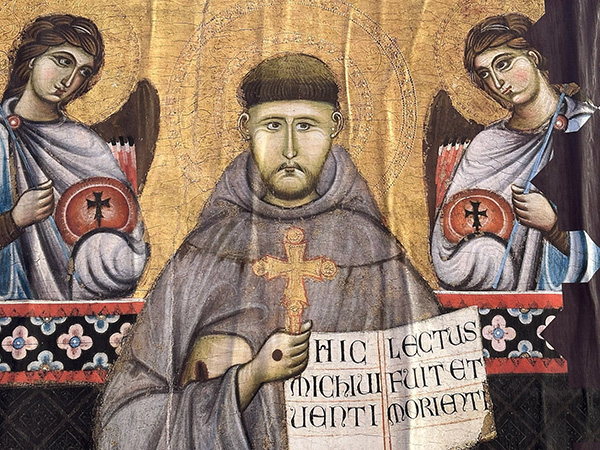
Known for renouncing his family’s wealth to embrace “Lady Poverty,” he attracted followers who ultimately formed the first Franciscans, the Order of Friars Minor. His “spiritual sister” St. Clare of Assisi founded the likeminded Poor Clares. This year, the Church is celebrating the 800th anniversary of his death with a Jubilee Year of St. Francis.
In St. Francis’ era (1181-1226), the vast majority of European Christians were Catholic, with the exception of Eastern Orthodoxy and some notable schismatic movements. The triggering events of the Protestant Reformation that would fracture Western Christianity were still hundreds of years away.
That being the case, Francis did not actually exercise ecumenism — the promotion of unity among the world’s Christian churches — in the technical sense. But the saint’s profoundly thoughtful and peaceful example nonetheless continues to transcend present-day denominational differences, offering his eight-century legacy as a welcoming entry point for ecumenical relations.
“St. Francis is perhaps more clearly associated with interreligious dialogue, in the light of his famous encounter with Sultan Malik al-Kamil in 1219,” said Father Martin Browne, a Benedictine priest who serves in the Vatican’s Dicastery for Promoting Christian Unity.
At the height of the Fifth Crusade (1217-1221) — which aimed to reclaim Jerusalem from Muslim control — St. Francis travelled to the Middle East. Desiring to plead for peace and convert Muslim warriors to Catholicism, the friar impetuously crossed the battle lines and was received by Sultan Malik al-Kamil, an Egyptian leader of Egypt, Palestine and Syria.
“This remarkable encounter, which was surely a great personal risk, is of a piece with Francis’ self-understanding as revealed in his famous canticle,” said Father Browne, referring to St. Francis’ “Canticle of the Creatures,” a poetic celebration of the integrity of the world God made. “For this ‘lesser brother’ (friar minor), fraternity was a defining characteristic, uniting him not only with his relatives and his fellow friars, but with all people — including Muslim sultans.”
And while Francis did not convince the sultan to convert, his manner was so respectful that he was sent on his way with the parting gift of an ivory horn that can still be seen in Assisi today.
“This stance of radical fraternity is both encouragement and challenge to all who engage in dialogue today,” said Father Browne, “whether that be within their own church, between their church and other Christians, or between their church and followers of another or no faith. Recognizing our inherent fraternity transforms all dialogue relationships — and Francis is the great teacher of fraternity.”
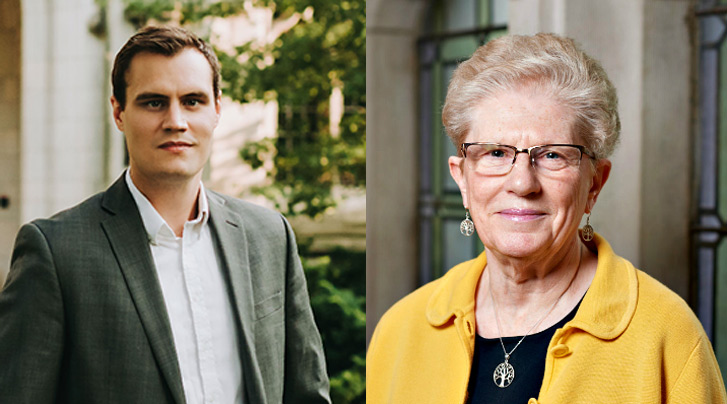
Aaron Hollander, executive director of the Graymoor Ecumenical & Interreligious Institute in New York, agreed.
“His teaching and his preaching are profoundly evangelical. And I think people recognize that — not just Protestants, but Orthodox as well,” Hollander said. “His life is almost like another parable of Jesus. I think it speaks to people in different ways — because it’s not just that Francis is telling us this or that, it’s in the way that he’s living.”
As a ministry of the Franciscan Friars of the Atonement — a religious community of brothers who were originally Episcopalians, but were received into the Roman Catholic Church in 1909 — Graymoor is also one of the most prominent promoters of the annual Week of Prayer for Christian Unity, observed annually Jan. 18-25.
“There are ways that Francis’ commitment to poverty, his commitment to justice, his commitment to the earth, are so manifest that they’re hard to ignore,” said Hollander, who is Episcopalian. “And they don’t depend on a kind of allegiance to one or another religious institution.”
Gilberto Cavazos-González, a Franciscan friar and chair of Franciscan spirituality at Catholic Theological Union in Chicago, said the Church “would be crazy not to” leverage St. Francis’ model for advancing ecumenism.
“I do think Pope Francis actually did that,” he said. “He takes the name — but then not only does he take the name, he actually brings Francis into some of his documents, which I think made him then a popular pope among even non-Catholics.”
That said, it should be noted that St. Francis “is authentically himself; he’s definitely Roman Catholic,” added Cavazos-González. “And he makes no apologies for that. He’s faithful to the Church.”
Agreeing with Browne, he explained that “I think the closest Francis got to ecumenical relations was his dealing with the sultan.”
A group of friars — who were to become known as the Five Franciscan Martyrs of Morocco — had a distinctly different approach than Francis. The would-be missionaries apparently made no effort to be irenic in their dealings with Muslims and were killed in Marrakech in 1220.
“So, Francis, in the rule (for Franciscan friars, finalized in 1223) — after he’d dealt with the sultan — basically says, ‘You go, you live among them, and shut up. And when the time is right, then OK — then you can talk about the Gospel. By the authenticity of your life, then you will draw others to Christ. Not by attacking or making fun of or ridiculing.
It is a simple yet effective method of dialogue that is as relevant now as it was then.
“There are so many exemplars or representatives of religious institutions that come across as hypocritical, or as saying one thing and doing another, or just too concerned with institutional niceties that aren’t of interest to folks outside of those communities,” observed Hollander. “But Francis demonstrates something about religion that is so fully authentic that it can’t be ignored — there’s something magnetic about it, whether or not you share the reasons for his convictions and the reasons for his actions.”
By Kimberley Heatherington
Originally published 27 March, 2026 on